




What is the quality standard of coal carburetant?
 Jun 18, 2025|
 Hey there! I'm a supplier of coal carburetant, and I've been in this industry for quite some time. Over the years, I've learned a thing or two about what makes a good coal carburetant. So, today I wanna chat about the quality standards of coal carburetant.
First off, let's understand what coal carburetant is. It's a crucial additive in the metallurgical industry, mainly used to increase the carbon content in steel and iron during the smelting process. This helps improve the strength, hardness, and other mechanical properties of the final metal products.
Key Quality Indicators
Carbon Content
The carbon content is perhaps the most important quality indicator of coal carburetant. Higher carbon content generally means better performance. In the market, the carbon content of coal carburetant usually ranges from 80% to 95%. For high - end applications, we often aim for a carbon content of over 90%. A high - carbon coal carburetant can more effectively increase the carbon content in the molten metal, reducing the amount of carburetant needed and improving the efficiency of the smelting process.
Volatile Matter
Volatile matter is another factor to consider. Volatile matter refers to the substances in the coal carburetant that will vaporize when heated. A high volatile matter content can cause problems during the smelting process, such as excessive smoke and gas emissions, which not only pollutes the environment but also affects the stability of the smelting operation. Generally, we want the volatile matter content in coal carburetant to be as low as possible, usually below 10%.
Ash Content
Ash is the inorganic residue left after the coal carburetant is completely burned. High ash content can reduce the effective carbon content of the carburetant and may also introduce impurities into the molten metal, affecting the quality of the final product. Good - quality coal carburetant should have a low ash content, typically less than 5%.
Sulfur and Phosphorus Content
Sulfur and phosphorus are harmful impurities in coal carburetant. Sulfur can cause hot brittleness in steel, making it more prone to cracking during hot working. Phosphorus can cause cold brittleness, reducing the toughness of the steel at low temperatures. Therefore, the sulfur and phosphorus content in coal carburetant should be strictly controlled. In most cases, the sulfur content should be less than 0.5%, and the phosphorus content should be less than 0.05%.
Particle Size
The particle size of coal carburetant also matters. The right particle size ensures good dispersion and dissolution in the molten metal. If the particles are too large, they may not dissolve completely, resulting in uneven carbon distribution in the metal. On the other hand, if the particles are too small, they may float on the surface of the molten metal and be lost due to oxidation. The appropriate particle size usually ranges from 1 - 5 mm, but it can vary depending on the specific smelting process and equipment.
Quality Control in Production
As a supplier, we pay great attention to quality control throughout the production process. We source high - quality raw coal from reliable mines. Before production, the raw coal undergoes strict testing to ensure it meets our quality requirements in terms of carbon content, volatile matter, ash content, etc.

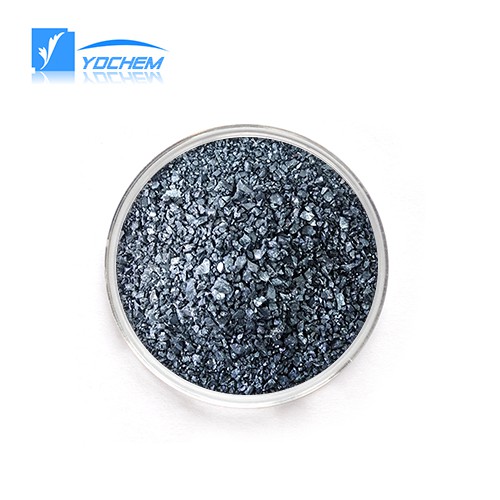
During the production process, we use advanced processing technologies to ensure the stability and consistency of the product quality. For example, we use crushing and screening equipment to control the particle size of the carburetant accurately. We also have a quality inspection team that conducts regular checks on the production line to detect and correct any quality issues in a timely manner.
Why Choose Our Coal Carburetant
Our coal carburetant has several advantages. Firstly, our high - quality raw materials and strict production process ensure that our product has a high carbon content, low volatile matter, ash content, sulfur, and phosphorus content. This means that it can effectively improve the quality of the final metal products and reduce production costs.
Secondly, we offer a variety of particle sizes to meet the different needs of our customers. Whether you're using a small - scale smelting furnace or a large - scale industrial smelter, we can provide the right coal carburetant for you.
If you're interested in learning more about Carburetant, we also have some related products. For example, Carborundum Diameter 60 Microns can be used in some specific metallurgical processes, and Calcium Carbide for Acetylene Production has its own unique applications in the industry.
Contact Us for Purchase
If you're in the market for high - quality coal carburetant, don't hesitate to contact us. We're always ready to provide you with detailed product information and competitive prices. Whether you're a small - scale metalworking shop or a large - scale steel mill, we can meet your needs. Let's start a great cooperation and take your metal production to the next level!
References
- Smith, J. (2020). Metallurgical Additives: A Comprehensive Guide. Metal Press.
- Johnson, R. (2019). The Role of Carburetant in Steelmaking. Iron and Steel Journal.