




What is the ignition point of coal carburetant?
 Oct 13, 2025|
 The ignition point of coal carburetant, also known as the ignition temperature, is a critical parameter that significantly influences its performance and application in various industrial processes. As a coal carburetant supplier, understanding this characteristic is essential for providing high - quality products and meeting the diverse needs of our customers.
Understanding the Concept of Ignition Point
The ignition point of a substance is the minimum temperature at which it will start to burn in the presence of an oxidizing agent, typically air. For coal carburetant, this is the temperature at which the carbon in the coal begins to react with oxygen in a self - sustaining exothermic reaction. When the coal carburetant reaches its ignition point, the heat released from the initial oxidation reaction is sufficient to continue the combustion process without an external heat source.
Several factors can affect the ignition point of coal carburetant. One of the most important factors is the coal's rank. Coal is classified into different ranks based on its degree of coalification, which is the process by which plant material is transformed into coal over time. Higher - rank coals, such as anthracite, generally have a higher ignition point compared to lower - rank coals like lignite. This is because higher - rank coals have a higher carbon content and a more complex molecular structure, which requires more energy to break the chemical bonds and initiate combustion.
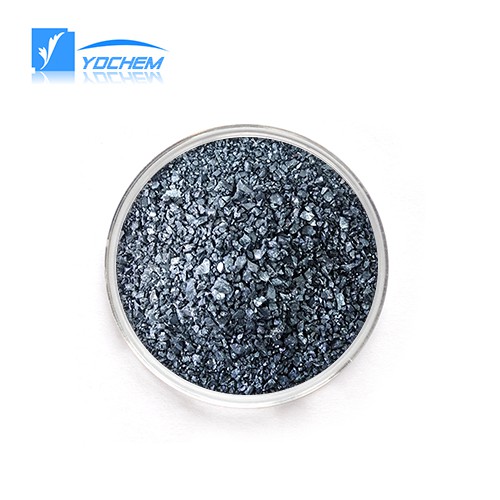
The particle size of the coal carburetant also plays a crucial role. Smaller particles have a larger surface area per unit mass, which means that they are more exposed to oxygen. As a result, coal carburetant with smaller particle sizes tends to have a lower ignition point because the increased surface area allows for more efficient heat transfer and oxygen diffusion, facilitating the combustion process. For example, Carborundum Diameter 60 Microns with a relatively small diameter may have different ignition characteristics compared to larger - sized particles.
Measuring the Ignition Point of Coal Carburetant
There are several methods available for measuring the ignition point of coal carburetant. One common method is the differential thermal analysis (DTA). In DTA, a sample of the coal carburetant is heated at a constant rate in an oxygen - containing atmosphere, and the temperature difference between the sample and a reference material is measured. When the coal carburetant reaches its ignition point, an exothermic peak is observed in the DTA curve, indicating the start of combustion.
Another method is the thermogravimetric analysis (TGA) combined with differential scanning calorimetry (DSC). TGA measures the change in mass of the sample as it is heated, while DSC measures the heat flow associated with physical and chemical changes. By analyzing the TGA - DSC curves, the ignition point of the coal carburetant can be determined. These analytical techniques provide valuable information about the thermal behavior of the coal carburetant, which is essential for optimizing its use in industrial applications.
Importance of Ignition Point in Industrial Applications
In the steelmaking industry, coal carburetant is widely used as a source of carbon to increase the carbon content of molten steel. The ignition point of the coal carburetant is crucial in this process because it affects the efficiency of carbon addition. If the ignition point is too high, more energy is required to initiate combustion, which can increase the production cost and reduce the overall efficiency of the steelmaking process. On the other hand, if the ignition point is too low, the coal carburetant may start to burn prematurely, leading to uneven carbon distribution in the molten steel and potential quality issues.
In foundry applications, coal carburetant is used to control the carbon content of cast iron. A proper ignition point ensures that the carburetant can be effectively incorporated into the molten metal, improving the mechanical properties of the castings. For example, in the production of high - strength cast iron, a coal carburetant with an appropriate ignition point can help to achieve the desired carbon level, resulting in better hardness, toughness, and wear resistance.
Quality Control and Product Selection
As a Coal Carburetant supplier, we pay close attention to the ignition point of our products. Through strict quality control measures, we ensure that the coal carburetant we supply has a consistent ignition point within a specified range. This is achieved by carefully selecting the raw materials, controlling the production process, and conducting regular quality inspections.
When selecting a coal carburetant for a specific application, it is important to consider the ignition point in conjunction with other properties such as carbon content, volatile matter, and ash content. For example, a high - carbon coal carburetant with a relatively low ignition point may be suitable for applications where rapid carbon addition is required, while a coal carburetant with a higher ignition point and lower volatile matter may be preferred for applications where better control of the combustion process is needed.
Impact of Impurities on Ignition Point
Impurities in coal carburetant can also have a significant impact on its ignition point. Sulfur, for instance, is a common impurity in coal. High sulfur content can lower the ignition point of coal carburetant because sulfur can react with oxygen more readily than carbon, releasing heat and facilitating the ignition of the carbon. However, high sulfur content can also lead to environmental problems, such as the emission of sulfur dioxide during combustion.
Ash is another impurity that can affect the ignition point. Ash consists of inorganic minerals that do not burn. A high ash content can increase the ignition point of coal carburetant because the ash acts as a heat sink, absorbing heat and reducing the available energy for combustion. In addition, ash can also cause slagging and fouling problems in industrial furnaces, reducing the efficiency of the combustion process.
Future Trends in Coal Carburetant Research
In recent years, there has been a growing interest in developing coal carburetant with more favorable ignition characteristics. Researchers are exploring new methods to modify the coal structure and reduce the ignition point without sacrificing other important properties. For example, some studies are focusing on the use of catalysts to promote the combustion of coal carburetant at lower temperatures.
Another trend is the development of more environmentally friendly coal carburetant. With increasing environmental regulations, there is a need to reduce the emissions of pollutants such as sulfur dioxide and particulate matter during the combustion of coal carburetant. This may involve the use of cleaner coal sources or the application of advanced cleaning technologies to remove impurities from the coal before it is used as a carburetant.

Conclusion
The ignition point of coal carburetant is a fundamental property that has a profound impact on its performance in various industrial applications. As a Carburetant supplier, we are committed to providing high - quality products with well - controlled ignition points. By understanding the factors that affect the ignition point, measuring it accurately, and considering its importance in different applications, we can better meet the needs of our customers and contribute to the efficient and sustainable operation of industrial processes.
If you are interested in our coal carburetant products or have any questions about the ignition point or other properties, please feel free to contact us for further discussion and potential procurement. We look forward to the opportunity to work with you and provide you with the best solutions for your specific requirements.
References
- ASTM International. Standard Test Methods for Proximate Analysis of Coal and Coke. ASTM D3172 - 13.
- Speight, J. G. The Chemistry and Technology of Coal. CRC Press, 2013.
- Van Krevelen, D. W. Coal: Typology, Physics, Chemistry, Constitution. Elsevier, 1993.