




How to detect the purity of Dicyandiamide Powder?
 Aug 28, 2025|
 Hey there! As a supplier of Dicyandiamide Powder, I often get asked about how to detect its purity. It's a crucial aspect, especially for those in industries that rely on high - quality chemicals. In this blog, I'll share some methods and insights on detecting the purity of Dicyandiamide Powder.
Why Purity Detection Matters
First off, let's talk about why it's so important to know the purity of Dicyandiamide Powder. Dicyandiamide has a wide range of applications, from being used in the production of Guanidine Phosphate Monobasic to Poly(hexamethylenebicyanoguanide - hexamethylenediamine) Hydrochloride and Refined Guanidine Nitrate. Impurities in the powder can affect the quality and performance of the final products. For example, in the manufacturing of certain polymers, even a small amount of impurity in Dicyandiamide can lead to changes in the polymer's properties, such as its strength, flexibility, and chemical resistance.
Visual Inspection
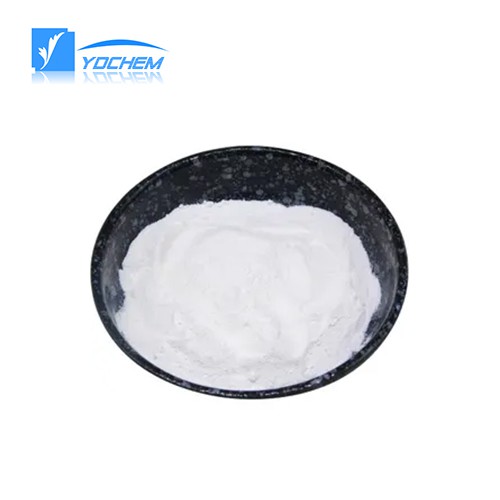
The simplest way to start checking the purity of Dicyandiamide Powder is through visual inspection. High - purity Dicyandiamide Powder should be a white, crystalline solid. If you notice any discoloration, like yellowing or the presence of dark specks, it could be a sign of impurities. However, this method is quite basic and can't give you an accurate measure of the purity. It's more of a quick initial check. Sometimes, the discoloration might be due to exposure to air, moisture, or improper storage rather than actual chemical impurities. But if the powder looks off - color right out of the package, it's definitely something to be concerned about.
Melting Point Determination
One of the classic methods for detecting purity is by determining the melting point. Pure Dicyandiamide has a well - defined melting point range. When you heat a sample of the powder, a pure substance will melt within a narrow temperature range. Impurities, on the other hand, tend to lower the melting point and broaden the melting range.

To do this, you'll need a melting point apparatus. You take a small amount of the Dicyandiamide Powder and place it in a capillary tube. Then, you gradually heat the tube in the apparatus and observe the temperature at which the powder starts to melt and when it completely melts. Compare the results with the known melting point range of pure Dicyandiamide. If the melting point you observe is significantly lower or the range is much wider, it indicates the presence of impurities.
Elemental Analysis
Elemental analysis is a more advanced method for detecting purity. It helps to identify the elements present in the Dicyandiamide Powder and their relative amounts. There are several techniques for elemental analysis, such as atomic absorption spectroscopy (AAS) and inductively coupled plasma - mass spectrometry (ICP - MS).
AAS works by measuring the absorption of light by atoms of a particular element in the sample. Each element absorbs light at specific wavelengths, so by analyzing the absorption spectrum, you can determine which elements are present and in what quantities. ICP - MS, on the other hand, uses a plasma to ionize the sample and then a mass spectrometer to separate and detect the ions based on their mass - to - charge ratio.
These methods can detect even trace amounts of impurities, such as heavy metals or other elements that shouldn't be present in pure Dicyandiamide. For example, if there are traces of iron or copper in the powder, it could affect its reactivity in certain chemical reactions.
Chromatographic Methods
Chromatography is another powerful tool for purity detection. High - performance liquid chromatography (HPLC) and gas chromatography (GC) are commonly used.
HPLC separates the components of a sample based on their interaction with a stationary phase and a mobile phase. The sample is dissolved in a liquid (the mobile phase) and passed through a column filled with a stationary phase. Different components of the sample will travel through the column at different rates, depending on their chemical properties. By detecting the components as they exit the column, you can identify and quantify the impurities in the Dicyandiamide Powder.
GC is similar, but it uses a gas as the mobile phase. It's especially useful for volatile or semi - volatile compounds. The sample is vaporized and carried through a column by an inert gas. The separation occurs based on the differences in the volatility and interaction of the components with the stationary phase.
Spectroscopic Methods
Spectroscopic methods, such as infrared (IR) spectroscopy and nuclear magnetic resonance (NMR) spectroscopy, can also be used to detect impurities.
IR spectroscopy measures the absorption of infrared light by the chemical bonds in the sample. Different chemical bonds absorb infrared light at specific frequencies, so by analyzing the IR spectrum, you can identify the functional groups present in the Dicyandiamide Powder. If there are impurities, they will have their own characteristic IR absorption peaks, which can be used to detect and identify them.
NMR spectroscopy, on the other hand, provides information about the structure and environment of the atoms in the molecule. By analyzing the NMR spectrum, you can determine the chemical structure of the main component (Dicyandiamide) and also detect any impurities based on the additional peaks or changes in the spectrum.
Conclusion
Detecting the purity of Dicyandiamide Powder is essential for ensuring the quality of the products it's used in. There are various methods available, from simple visual inspection to advanced analytical techniques like elemental analysis, chromatography, and spectroscopy. Each method has its own advantages and limitations, and in many cases, a combination of methods is used to get a more accurate assessment of the purity.
If you're in the market for high - quality Dicyandiamide Powder or have any questions about purity detection, don't hesitate to reach out. We're here to help you make the right choice for your specific needs. Whether you're a small - scale manufacturer or a large - scale industrial user, we can provide you with the information and products you need. Contact us to start a procurement discussion and let's work together to find the best solution for your business.
References
- "Introduction to Analytical Chemistry" by Douglas A. Skoog, Donald M. West, F. James Holler, and Stanley R. Crouch
- "Chromatography: Principles and Applications" by E. Katz and J. H. Knox
- "Spectroscopic Methods in Organic Chemistry" by Peter H. Wright and Stephen Swann